Escuela Dominical · 8 a 10 años · Lección 10
Sunday School · Ages 8 to 10 · Lesson 10
Jesús alimenta a los cinco mil
Jesus Feeds the Five Thousand
Pasaje bíblico
Bible Passage
Juan 6:1-14. Léelo completo antes de la clase. Es el único milagro que aparece en los cuatro evangelios; Juan es el que menciona al muchacho de los cinco panes, y Mateo 14:21 aclara que eran unos cinco mil hombres, sin contar a las mujeres y los niños.
John 6:1-14. Read the whole passage before class. It is the only miracle that appears in all four Gospels; John is the one who mentions the boy with the five loaves, and Matthew 14:21 explains that there were about five thousand men, besides women and children.
Versículo para memorizar
Memory Verse
“Yo soy el pan de vida; el que viene a mí nunca tendrá hambre” (Juan 6:35)
“I am the bread of life. Whoever comes to Me will never hunger” (John 6:35)
Objetivo
Goal
Que los niños vean que Jesús tiene poder para suplir lo que necesitamos, que puede usar lo poco que le entregamos, por pequeño que parezca, y que Él mismo es el pan de vida que nos satisface para siempre.
That the children see that Jesus has the power to provide what we need, that He can use the little we give Him, no matter how small it seems, and that He Himself is the bread of life who satisfies us forever.
Materiales
Materials
- Una canasta con cinco panes pequeños (o galletas) y dos peces de papel.
- A basket with five small loaves of bread (or crackers) and two paper fish.
- Galletas o pan suficiente para todos los niños (para compartir al final; consulta alergias).
- Crackers or bread for all the children (to share at the end; check for allergies).
- Hojas, lápices de colores.
- Paper, colored pencils.
- Doce papeles doblados como canastas, o doce vasos.
- Twelve pieces of paper folded into baskets, or twelve cups.
Para empezar
Getting Started
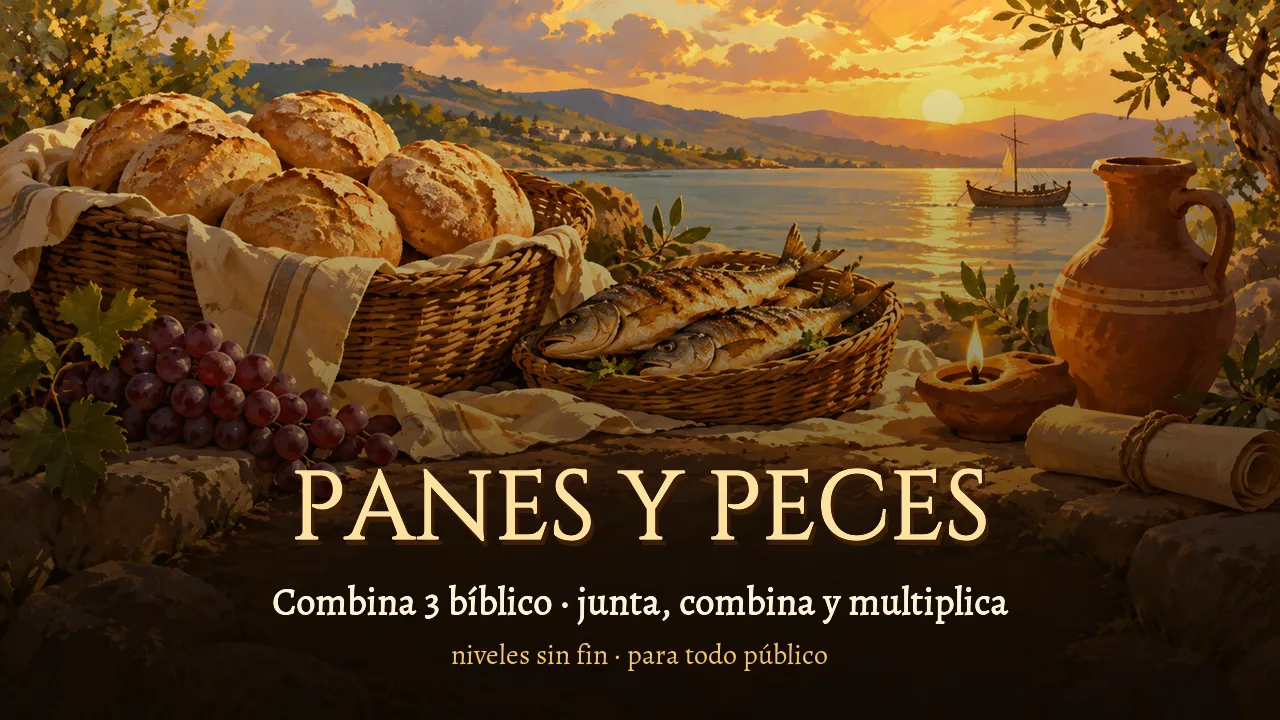
Muestra la canasta con cinco panes y dos peces, y pregunta: «Si tuviéramos que dar de comer con esto a todos los que están en la iglesia hoy, ¿alcanzaría? ¿Y si fueran miles de personas?». Deja que calculen y se rían. Luego di: «Hoy veremos qué hizo Jesús con una canasta como esta».
Show the basket with five loaves and two fish, and ask: “If we had to feed everyone at church today with this, would it be enough? What if there were thousands of people?” Let them do the math and laugh. Then say: “Today we will see what Jesus did with a basket like this one.”
Historia bíblica
Bible Story

Jesús cruzó al otro lado del mar de Galilea. Una gran multitud lo seguía, porque habían visto cómo sanaba a los enfermos. Jesús subió a un monte y se sentó con sus discípulos. Faltaba poco para la Pascua, la gran fiesta de los judíos, y muchos viajaban por esa región.
Jesus crossed to the other side of the Sea of Galilee. A large crowd followed Him, because they had seen how He healed the sick. Jesus went up on a mountainside and sat down with His disciples. The Passover, the great feast of the Jews, was near, and many people were traveling through that area.
Jesús levantó la mirada y vio que una multitud enorme venía hacia Él. Entonces le preguntó a Felipe, uno de sus discípulos: «¿Dónde compraremos pan para que coma esta gente?». La Biblia aclara que Jesús ya sabía lo que iba a hacer; lo preguntó para poner a prueba a Felipe, para ver si confiaba en Él. Felipe hizo cuentas y respondió: «Ni doscientos denarios de pan alcanzarían para que cada uno reciba un poquito». Un denario era lo que ganaba un trabajador en un día; doscientos denarios eran el salario de casi siete meses. ¡Y aun así no alcanzaría!
Jesus looked up and saw that a huge crowd was coming toward Him. So He asked Philip, one of His disciples: “Where can we buy bread for these people to eat?” The Bible explains that Jesus already knew what He was going to do; He asked this to test Philip, to see if he trusted Him. Philip did the math and answered: “Two hundred denarii would not buy enough bread for each of them to have a small piece.” A denarius was what a worker earned in one day; two hundred denarii were almost seven months’ wages. And even that wouldn’t be enough!
Entonces Andrés, el hermano de Simón Pedro, dijo: «Aquí hay un muchacho que tiene cinco panes de cebada y dos pescaditos; pero ¿qué es esto para tanta gente?». El pan de cebada era el pan barato, el que comían los pobres. Los pescaditos probablemente eran pequeños y secos o salados. Era la comida de un muchacho, no un banquete para miles.
Then Andrew, Simon Peter’s brother, said: “Here is a boy with five barley loaves and two small fish. But what difference will these make among so many?” Barley bread was cheap bread, the kind poor people ate. The fish were probably small and dried or salted. It was a boy’s lunch, not a banquet for thousands.
Jesús dijo: «Hagan que la gente se siente». Había mucha hierba en aquel lugar, y se sentaron unos cinco mil hombres. Si contamos también a las mujeres y a los niños, ¡eran muchos más! Entonces Jesús tomó los panes, dio gracias a Dios y los repartió entre los que estaban sentados; e hizo lo mismo con los pescados. La Biblia dice que les dio todo lo que quisieron. Nadie recibió una migaja: todos comieron hasta quedar satisfechos.
Jesus said: “Have the people sit down.” There was plenty of grass in that place, and about five thousand men sat down. If we also count the women and children, there were many more! Then Jesus took the loaves, gave thanks to God, and handed them out to those who were seated; and He did the same with the fish. The Bible says He gave them as much as they wanted. Nobody got just a crumb: everyone ate until they were full.
Cuando todos estaban llenos, Jesús dijo a sus discípulos: «Recojan los pedazos que sobraron, para que no se pierda nada». Ellos los recogieron y llenaron doce canastas con lo que sobró de los cinco panes de cebada. Al principio no había suficiente ni para empezar; al final sobró más de lo que había al comienzo.
When everyone was full, Jesus said to His disciples: “Gather the pieces that are left over, so that nothing will be wasted.” They gathered them up and filled twelve baskets with what was left over from the five barley loaves. At first there wasn’t enough even to get started; in the end there was more left over than there had been at the beginning.
Al ver esta señal, la gente decía: «Verdaderamente este es el profeta que había de venir al mundo». Recordaban que, en tiempos de Moisés, Dios había alimentado a su pueblo en el desierto con maná, el pan del cielo. Ahora Jesús estaba alimentando a una multitud en un lugar apartado.
When the people saw this sign, they said: “Truly this is the Prophet who is to come into the world.” They remembered that in the time of Moses, God had fed His people in the wilderness with manna, the bread from heaven. Now Jesus was feeding a crowd in a remote place.
Al día siguiente, mucha gente volvió a buscar a Jesús, pero solo porque querían más comida. Entonces Jesús les explicó el verdadero sentido de la señal: «Yo soy el pan de vida; el que viene a mí nunca tendrá hambre». El pan llena el estómago por unas horas, pero Jesús vino a darnos vida eterna. Él no solo da pan: Él es el pan que necesitamos.
The next day, many people came looking for Jesus again, but only because they wanted more food. So Jesus explained to them the true meaning of the sign: “I am the bread of life. Whoever comes to Me will never hunger.” Bread fills your stomach for a few hours, but Jesus came to give us eternal life. He doesn’t just give bread: He is the bread we need.
Lo que aprendemos
What We Learn
- Jesús tiene poder para suplir lo que necesitamos, aun cuando parece imposible.
- Jesus has the power to provide what we need, even when it seems impossible.
- Jesús puede usar lo poco que le entregamos. El almuerzo de un muchacho alimentó a miles.
- Jesus can use the little we give Him. One boy’s lunch fed thousands.
- Jesús da con abundancia y no desperdicia nada: sobraron doce canastas.
- Jesus gives abundantly and wastes nothing: there were twelve baskets left over.
- Jesús es el pan de vida. Lo que más necesitamos no es comida, sino a Él.
- Jesus is the bread of life. What we need most is not food, but Him.
Aplicación práctica
Putting It into Practice
A veces pensamos que somos muy pequeños para servir a Dios o que lo que tenemos no sirve para nada. Pero Jesús puede usar tu tiempo, tus talentos, tu ayuda y tus oraciones, por pequeños que parezcan. Puedes compartir tu merienda con un compañero, ayudar en casa sin que te lo pidan, cantar en la iglesia o invitar a un amigo a conocer a Jesús. Lo importante no es cuánto tienes, sino ponerlo en las manos de Jesús. Y recuerda también dar gracias por la comida, como hizo Jesús antes de repartirla.
Sometimes we think we are too small to serve God, or that what we have is worthless. But Jesus can use your time, your talents, your help, and your prayers, however small they seem. You can share your snack with a classmate, help at home without being asked, sing at church, or invite a friend to get to know Jesus. What matters is not how much you have, but putting it in Jesus’ hands. And remember to give thanks for your food, just as Jesus did before He handed it out.
Actividad
Activity
Dos canastas: cada niño dibuja dos canastas. En la primera escribe lo «poco» que puede darle a Jesús (tiempo, ayuda, obediencia, talentos, una merienda). En la segunda, lo que Jesús puede hacer con eso (bendecir a otros, ayudar a alguien triste, alimentar a quien tiene hambre).
Two baskets: each child draws two baskets. In the first one, they write the “little” they can give Jesus (time, help, obedience, talents, a snack). In the second one, what Jesus can do with it (bless others, help someone who is sad, feed someone who is hungry).
Idea extra: siéntense todos en el piso como la multitud sobre la hierba. Un niño hace de muchacho y entrega la canasta al maestro. El maestro da gracias en voz alta y reparte pan o galletas a todos. Luego los niños «recogen» los pedazos en las doce canastas de papel mientras cuentan hasta doce.
Extra idea: everyone sits on the floor like the crowd on the grass. One child plays the boy and hands the basket to the teacher. The teacher gives thanks out loud and hands out bread or crackers to everyone. Then the children “gather” the pieces into the twelve paper baskets while they count to twelve.
Preguntas para conversar
Discussion Questions
- ¿Qué le preguntó Jesús a Felipe y qué le respondió él?
- What did Jesus ask Philip, and what did Philip answer?
- ¿Qué tenía el muchacho y quién lo llevó ante Jesús?
- What did the boy have, and who brought him to Jesus?
- ¿Qué hizo Jesús antes de repartir los panes y los pescados?
- What did Jesus do before He handed out the loaves and the fish?
- ¿Cuántas canastas sobraron? ¿Qué nos enseña eso?
- How many baskets were left over? What does that teach us?
- ¿Qué quiso decir Jesús cuando dijo «Yo soy el pan de vida»?
- What did Jesus mean when He said, “I am the bread of life”?
- ¿Qué tienes tú que Jesús puede usar para bendecir a otros?
- What do you have that Jesus can use to bless others?
Desafío de la semana
Challenge of the Week
Esta semana, comparte algo tuyo con alguien que lo necesite: tu merienda, un juguete o tu tiempo para ayudar. En casa, propón que antes de cada comida alguien distinto de la familia dé gracias a Dios, como hizo Jesús, y juntos recojan una bolsa de alimentos para donar a una familia necesitada o a tu iglesia.
This week, share something of yours with someone who needs it: your snack, a toy, or your time to help. At home, suggest that before each meal a different family member gives thanks to God, as Jesus did, and together collect a bag of food to donate to a family in need or to your church.
Oración final
Closing Prayer
“Señor Jesús, gracias porque puedes hacer cosas grandes con cosas pequeñas. Te entrego mi tiempo, mis talentos y todo lo que soy, aunque parezca poco. Gracias porque tú eres el pan de vida y en ti tengo todo lo que necesito. Amén.”
“Lord Jesus, thank You that You can do big things with small things. I give You my time, my talents, and all that I am, even if it seems like little. Thank You that You are the bread of life and in You I have everything I need. Amen.”
Juega esta historiaPlay this story
← Lección anterior · Índice 8 a 10 años · Lección siguiente →